Thursday, January 29, 2015

Essay: The Portrayal of Women in Cupid and Psyche

Venus Punishing Psyche with a Task by Luca Giordano (ca. 1692-1702)
The portrayal of women in stories and literature has evolved drastically since ancient times. In ancient stories and literature there is a pattern of women being portrayed as weak and naive as well as being made out to be slaves to their baser instincts. This pattern is a testament to the low status that women held in Ancient Greek and Roman cultures. Aristotle, one of the world's greatest philosophers even once claimed that women were in fact "deformed men". In the Cupid and Psyche unit, two of the main characters Psyche and Venus are women, and even though the play a large role in the story, the ancient attitude of the inferiority and weakness of women is readily present.

Throughout the story Psyche is presented as a woman of astonishing beauty. There is even a section in the story dedicated explicitly to describing how people abandoned their worship of Venus, the goddess of beauty, and began to worship Psyche as though she were a goddess. While heralding Psyche for her incredible beauty may seem positive, the mention that she had caused people to abandon their love for Venus, one of their gods, incites ideas that she is a seductress, a trait that is not highly viewed in classical societies.

Beyond Psyche's beauty almost no other positive characteristic is described about her. Instead she is portrayed as a beautiful but naive, disobedient, and weak woman. Her husband constantly has to warn her not to believe the words of her sisters (who are also interestingly enough portrayed as the bad guys of the story) and not to try to find out what she looks like. She seems to have no thoughts of her own except to willingly believe what everyone else tells her. Every time she is faced with a problem her first instinct is to weep until someone comes along to solve it for her. This is so clearly a representation of women in society at the time. They were regarded as property, as serving no real purpose except to carry children, items to be seen and not heard.

Even being a goddess, Venus, the other major female character in the story, could not escape a negative and misogynistic portrayal. She was made to possess all of the qualities attributed to women which Psyche did not fulfill.  Venus was jealous, vindictive, and irrational. Beyond being weak and stupid, women in Classical societies were thought to be slaves to their base instincts, basically animals. The characteristic possessed by Venus in this story, directly corroborate that ideal. Upon seeing Psyche, Venus is so full of jealousy she immediately seeks to destroy her. She devises a plan for Psyche's demise and charges her son with the task, and when her son goes against her wishes she proves to be vindictive and violent. There is nothing positive about Venus's character in this story at all.

Throughout the story of Cupid and Psyche, the only positive characteristic attributed to any of the female characters were their beauty. Even that concession however is riddled with negativity as it ends up being the major source of strife throughout the story. The portrayal of the female characters in this story is a true testament to the misogynistic and patriarchal culture of the ancient Greek and Romans.

Links: Reading unit: Cupid and Psyche
Psyche's Beauty
Psyche's Husband Warns Her
Venus and the Goddesses
Venus and Psyche

Wednesday, January 28, 2015

Week Three Storytelling: Monster-in-Law

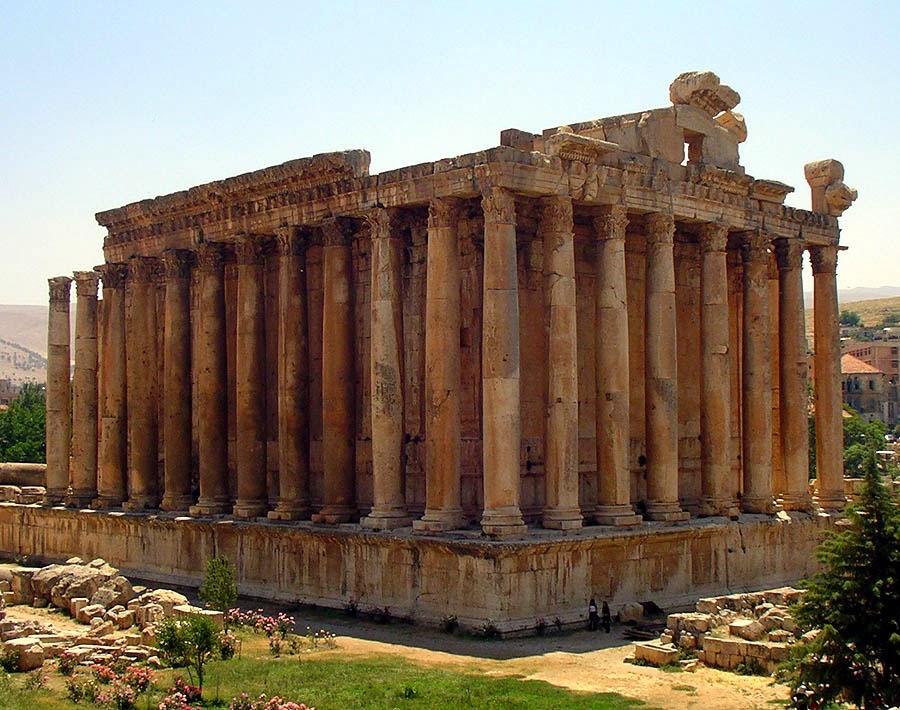
Roman Temple of Aphrodite
My hair was being pulled. Hard. Any harder and my hair was going to come out, I was sure of it. I let out an unladylike grunt as the woman manhandled me, dragging me inside of the temple. The woman yanked me to a stop, and I stumbled, bringing my arms protectively to my stomach in case I should fall.

Well, not quite the welcome I'd hoped for, I snorted to myself. When you're entering the temple of your mother-in-law, you're usually hoping for something a little warmer, but then again my mother-in-law was currently on a mission to kill me, so what did I expect? Venus was mad, and by mad I mean furious that her son Cupid had married me. (She has some sort of jealousy thing because I'm a little to beautiful for her liking, plus I'm a mortal. Ya know, the normal family issues).

Speaking of Cupid, where was that drama king anyway? I'd been looking for my impossibly angry husband for days, while simultaneously trying to prevent Venus from killing me.

Ugh, men. You have a couple little doubts when you realize you've never seen your husband's face, and suddenly its the end of the world. I mean, sure, in hindsight the whole 'he could be a giant killer serpent, so I'm gonna bring a razor to bed with me' thing may have been a little melodramatic, but it was a one time thing! Sue me. 

But here I was, in this stupid temple and in a completely desperate situation, about to beg Venus for mercy and forgiveness. I hugged my belly a little tighter, wishing I would feel that comforting flutter of a kick to know my baby was still here, that he was okay, that he was on my side.

"Well, well, well, if it isn't my precious daughter-in-law." Venus stalked toward me, her voice dripping with sarcasm as her face twisted into a smirk. Oh good gods, here we go. "Come to beg me at last have you? Or are you just here to see your husband? No matter really, I have plans for you anyway."

"Goody," I said flatly. So this is where my husband has been all of this time. Of course.

"Look at this girl. Coming here, practically parading her pregnant belly around, trying to rub it in my face that my stupid, stupid son has fathered a bastard." Venus addressed her servants.

In my defense, I was hardly parading my pregnancy. Being 8 months pregnant is a little hard to hide. Leave it to my mother-in-law to exaggerate wildly though.

"Don't even bother thinking that there is a hope in the world of me allowing that child to be legitimate. You'll be lucky if I even let this monstrosity be born." Venus went on cruelly. I hugged myself tightly, tears pricking my eyes. Buck up, Psyche, now is not the time to be getting all hormonal. I schooled my features, steeling myself against her hateful words before shooting her an icy glare. If only looks could kill.

My silence infuriated Venus, and suddenly she was attacking me, ripping at my hair, tearing at my robes, screaming in rage. I hunched protectively over my belly, curling into myself, trying only to protect my baby. Tears streamed down my face. She stopped finally, as quickly as she had started, and stepped away from me, disheveled and breathing hard. She spoke to one of her servants who ran to the kitchens to do her bidding. She stared at me coldly, until they'd come back, heaving a giant bag. "Sort these," she motioned toward the sack. "Before the evening is done. Show it to me for approval." Then she turned on her heel and took off, her servants hurrying after her.

I stood there dumbly. I was bruised, bleeding even. My clothes were tattered. What had once been a beautiful draping of sapphire silk, now hung around me in limp tatters. I stepped towards the sack, peaking into it. You've gotta be flippin' kidding me. Beans. The bag was full of beans. At least 10 different kinds. Venus wanted me to sort a giant sack of beans.

I was suddenly exhausted. The kind of exhaustion that extends all of the way to your bones. My arms and legs felt like lead. I sank to the ground, sighing a breath that ended in a sob. This was asinine. This was literally completely insane. I was sorting BEANS for my psychotic monster-in-law in the hopes that she would decide not to destroy my life, my marriage, and my child. If I didn't love my stupid, impossibly aggravating husband so much, and if I weren't carrying his baby, I would just let her destroy me. But I was in love with him, and I was carrying his baby. This precious, lovely baby I was carrying. This tiny child who comforted me with his kicks, who promised to be everything I had ever dreamed of. I would do whatever crazy thing Venus demanded of me for this baby.

I began sorting. It was slow work. I would never finish in time. But then I heard a small cough. I looked up and a child stepped out of the dark corridor leading to the kitchens. She walked toward me, looking at the sack with a pitying glance. "You'll never finish that. You better let me help." She hesitated for a moment, then held up one finger to me, signaling that I should wait, as she ran back to where she'd come from.

She came back quickly, bringing with her a hoard of other children, all varying ages. They sat down close to me, and wordlessly began passing the giant sack around until everyone had a heaping pile of beans. And then we all began to sort. Maybe I'll make it out of this ridiculous mess after all.

Authors Note: Okay so my main problem with the Cupid and Psyche unit was that as much as I wanted to really like Psyche and really root for her, she didn't seem to have much of a personality. She doesn't really think for herself and frankly, she's kind of a cry baby. I'm all about strong female characters. I like to read about women who are smart and courageous, who think for themselves, who don't whimper and simper and wait around all day waiting for someone else to give them the answers. One of my favorite scenes in this story was when Psyche finally goes to Venus to try and get everything figured out. I wanted to portray this scene in a different light though. I really wanted to turn Psyche into a strong character, someone with a personality, with opinions, and a lot of self respect and confidence. I also thought that if I was going to make Psyche more lively and outspoken that it would make more sense to give the story a more modern type of feel and attitude. So this is my take on Venus and Psyche. Thanks for reading!

BibliographyVenus and Psyche, Apuleius's Golden Ass translated by Tony Kline (2013).

Tuesday, January 27, 2015

Reading Diary B: Cupid and Psyche

Okay so I liked the Cupid and Psyche unit, I particularly loved the second half. The episodes of the story where Venus sends Psyche on all of those crazy tasks was really fun to read, particularly because many of the tasks are familiar to me from modern fairy tales. The first task given to Psyche by Venus required her to sort a bunch of beans into their particular types. This is very similar to the task that the step-mother in Cinderella forces Cinderella to do if she wants to go to the ball.

Depiction of Psyche entering the underworld
in Psyche aux enfers by Eugene-Ernest
 Hillmarcher (1865)
I liked how the story portrays Psyche as very determined. She is able to complete all of the tasks (with some help from animal friends), all of the while she is desperately searching for Cupid. I particularly liked the final task given to Psyche. She is to travel to the underworld to obtain a bottle of Beauty from Persephone. There were so many stipulations that she had to follow in order to ensure her safe passage back to the world of the living, and she was prudent enough to follow all of those without question or hesitation. That shows determination. But she couldn't seem to resist opening the jar of Beauty even though she was warned not too. Honestly that kind of annoyed me. I mean, come one. You make it all of the way back from the Underworld with literally only one thing left to do, and you can't manage to do it? She's already the most beautiful woman in the world, why is she so willing to ignore the warning to potentially get just a little bit more beauty?

Also there is just one thing that I could not get over in the story. Psyche cried the entire way through it. Honestly, drives me nuts that women in ancient literature are always crying. I mean, come on. Toughen up. I would love for there to be a remake of this story where Psyche is just a little bit less emotional, and a lot more rational.

Reading Diary A: Cupid and Psyche

This reading unit (Cupid and Psyche) is really cool so far. I love that this is considered to be the first fairytale. The similarities to Beauty and the Beast are so easily apparent. I particularly like that episode of the story Psyche's Husband Warns Her of Danger as well as Psyche's Husband Revealed.

Psyche and Cupid depicted in Psyche et l'Amour
endormi
 
by Peter Paul Rubens (1636)
After the Psyche sees that her husband is Cupid and not some monstrous snake, her shame is so evident. She is almost frantic. She tries to hide her knife in the top of her dress but it flies out of her hand in her rush. The description of her actions after her reveal give the image of someone so frazzled and surprised into shame and remorse. I like this depiction because I think it is revealing of Pysche's character. She is a woman caught in a very strange situation. She is alone and lonely, and in love with a man she has never seen before. This would be a stressful situation, one in which it would be easy for people to instill fear and doubt within her, and her sisters do just that.

I think the depth of her shame and her remorse of bringing the knife to bed upon seeing her husband is evidence of how vulnerable she was to her sisters' claims, as well as how relieved she must feel to know her husband had been telling her the truth, and trying to protect her against her sisters' lies.

I found it really interesting that she pricked herself with one of Cupid's arrows as well. It was an added element to the story that I did not forsee. Psyche already seemed to be falling in love with Cupid in the dark nights when he came to her. That while she was trying to reconcile her husband's identity with the plot her sisters' had created for her, she pricked her finger and fell more deeply in love with Cupid adds some tragedy to the story.

Cupid had warned her that if she tried to see his face there would be dramatic and serious consequences. Her breaking those rules and then fall uncontrollably further in love with him almost seems a cruel trick, particularly when it is easy to predict what will likely happen next, Cupid's departure.

Sunday, January 25, 2015

Storybook Project Topics

Browsing through different storybook topics, I've had a hard time narrowing down ides for my storybook. I know I would like for my storybook to focus on a single group of characters. I want the stories in my storybook to be continuous, like individual excerpts from one big story, but beyond that I'm still looking at a variety of characters from different periods and cultures.

The first topic I have become interested in revolves around the story of Hypermnestra, a Grecian woman, one of 50 sisters fathered by Danaus. There are several parts to her story. Her and her sisters are charged by their father with murdering their husbands on their wedding night and Hypermnestra is the only one who fails to go through with it. Her father tries to have Hypermnestra taken to court and tried for her life, but her life is saved and she is eventually reunited with her husband Lynceus. I don't know many of the details of the story, but I love the bones of it. There are so many different parts to this story: Danaus's plan, Hypermnestra and Lynceus' wedding night and why she chooses not to kill him, Hypermnestra's arrest, Lynceus's plan for revenge, the fate of Hypermnestra, Lynceus, and the rest of the characters. I love the idea of working from the points of view of both Hypermnestra as well as her husband Lynceus. I think it would be cool to learn the story from a mixture of points of view. Hypermnestra's story is told in many different forms by many different authors. There are several versions of the story translated online. Further part of Hypermnestra's story is told in Aeschylus's The Suppliant Women. Geoffrey Chaucer also wrote a prose poem describing the legend of Hypermnestra, which is available online. One part of Hypermnestra's story is told in a letter from Hypermnestra to Lynceus in The Epistles of Ovid. I would love to remake this letter and include a story behind it in my storybook.
Hypermnestra to Lynceus P. Ovidius Naso's The Epistles of Ovid retold in prose by London J. Nunn (1813).


Another set of characters I came across that interested me were those in the Gaelic Fenian cycle of mythology. I particularly liked the characters Diarmuid, Grainne, and Fionn. There are many different stories including Diarmuid and Fionn, but I particularly like the story of The Pursuit of Diarmuid and Grainne. This story outlines the meeting of these three characters. Grainne is betrothed to Fionn, who is older even than her father. She instantly becomes enamored with one of his warriors (Diarmuid) and convinces him to run away with her. This story is also interesting because it is thought to have influenced the story of Tristan and Iseult. Whether I would note that as an interesting point, try to entwine the stories together, or tell them parallel to each other, I'm not sure, but I do think the connection is interesting. Diarmuid was a warrior of the Fianna, part of the Fenian cycle of Irish mythology. There are many different translations of The Pursuit of Diarmuid and Grainne online, as well as many translations of stories from the Fenian cycle of Irish mythology. Many of these stories include characters which are also present in The Pursuit of Diarmuid and Grainne. I would be interested in using the different stories from the Fenian Cycle in order to get ideas for minor characters which may have played a role in the stories of Diarmuid and Grainne.
The Pursuit of Diarmuid and Grainne, Ethna Carbery's In the Celtic Past (1904).


I really love Hector and Andromache from Ancient Greek stories. I like the idea of making a storybook about them, and including stories about them together, as well as stories about Helen of Troy and Paris told from each of their perspectives. After Hector's death, Andromache goes on to live a long life in which she is married to two other men and bears 5 more children. In this storybook I would include stories of Andromache after Hector's death. I would love to include the episode from the Iliad in which Andromache and Hector see each other one last time before battle. I think this story is a beautiful representation of the loyalty and love that was between them, and I think it is an important story in order to understand the motivations, the values, and the dynamics of both Hector, Andromache, and their relationship.
Hector and Andromache, Homer's Iliad retold by Alfred J. Church (1907).

I also love stories of the King Arthur and the knights of the round table. I would love to focus on either King Arthur, Lancelot, Guinevere, and Morgan le Faye, or a combination of those four characters. There are many different accounts of the Arthurian legends, and many different stories within them. One of the stories I would like to include is part of the Lancelot Propre portion of the Vulgate cycle of the Arthurian legends. This story tells of the first kiss of Guinevere and Lancelot. It explains much about how their affair started, and I think it would be a cool story to explore in order to give some insight into the motives and mind of Guinevere particularly, but Lancelot as well. There are so many different tellings of the stories of King Arthur, Lancelot, Guinevere, and the rest of the Arthurian characters. There are several different translations of the French prose Lancelot, as well as many manuscripts in its written French which are available online. The UnTextbook also includes a unit including stories from King Arthur: Tales of the Round Table by Andrew Lang.
The First Kiss, Timeless Myths (Arthurian Legends) Jimmy Joe. (1999).

Wednesday, January 21, 2015

Week 2 Storytelling: At the Table with Achilles

It was evening and the night was stagnant, almost stifling. The faint acrid smell of burning wood hung in the air and off in the distance a cloud of smoke rose from over the water. Achilles was sitting outside his tent, gently plucking at the strings of a harp and singing softly of heroes of old and their valiant adventures. Patroclus, his dearest friend and right hand man, lounged in the grass near him, staring toward the rising cloud of smoke. The sun had just set and darkness was quickly approaching.

 Achilles, lost in his song and the gentle music of the harp, almost failed to hear the approaching foot steps. Patroclus scrambled hastily to his feet, his sudden energy a contrast to the tightly controlled movements of Achilles as he rose from the stool angling himself toward the oncoming figures.

Odysseus and Phoenix approaching Achilles
(Attic red-figure Hydria circa 480 BCE)
As they came closer, Achilles relaxed some as he recognized the figures to be Ulysses, Ajax, and Phoenix. He called out to them, "Brothers, welcome! Though I am angry with King Agamemnon, you are no less my friends."

After brief greetings, Achilles led the group into his tent while Patroclus set about mixing sweet wine and preparing a meal for the group to eat. Patroclus prepared a sacrifice for the gods, tossing it into the fire before serving the men. They sat around the table, eating and drinking, glad to be in each other's company again. The food was hearty, the wine strong, and the mood light.

As the meal went on, the three guests shifted glances at each other, and the energy in the room began to shift. Finally Phoenix cleared his throat. "Achilles, friend, truly this has been a feast, but there is no longer time to delay."

Achilles shifted in his seat, his body tensing as he directed his stare at his friend.

"The Trojans are gaining ground, they set many of our chariots aflame today, and it is doubtful how long we can hold them from our ships. It is apparent that Zeus is on their side. We are afraid, Achilles."

Achilles was silent, his face an impenetrable mask as Phoenix continued. "Rouse yourself Achilles, hold not yourself from battle any longer. Come back with us, fight again. Hector rages against us, screaming claims of Zeus's favor. He vows to destroy us, our men, our horses, our ships. Do not hold to your anger against Agamemnon so tightly that you will allow all of us to come to ruin."

Achilles looked down at the table, tense and silent, his anger at Agamemnon had not lessened. He had dishonored Achilles, stolen from him his rightful due and insulted him. Achilles could not fight for Agamemnon again, he wouldn't. But yet the Greeks, his brothers, friends, and countrymen were there fighting.

Phoenix began again, "Your father, Peleus, did not he warn you on the day you departed Myrmidones to fight for Agamemnon against the Trojans to stifle your pride and turn away from strife? Did not he charge you with this? And have you not abandoned his warning, abandoned the Greeks even, in your haste to prove a point to Agamemnon?"

Achilles kept his head down and stayed silent, but anger swelled in his heart. How dare Phoenix throw his father's words in his face, attempt to guilt him and shame him into fighting alongside Agamemnon! How dare he accuse him of abandoning the Greeks!

But Phoenix wasn't finished. "Come now, Achilles. You may still repent. The King, Agamemnon, has sent you many gifts, in hopes you will forgive his wrongs and take up arms with him again."

Ulysses interjected then, listing off the many wondrous gifts which Agamemnon had promised to Achilles. Horses and chariots, gold and silver, goblets, wine, lush fabrics, and his daughter for a bride. The gifts to which Agamemnon promised Achilles were boundless, but Achilles hardly heard them, so red with anger was he at the insult that he should repent to Agamemnon.

Shaking in rage, Achilles rose from his chair, looking at each of the men around his table. "We are friends, and thus I will speak to you plainly," he said, his words a crisp staccato of tightly controlled energy. "It angers me that each of you should sit at my table and attempt to coax me. To guilt me and shame me with the words of my father. To belittle the dishonor which Agamemnon has done to me."

The men looked down, chastened by Achilles tone, as he continued. "I have fought countless battles. I have been brave and strong. I have put my life in peril time and time again. And what has it profited me? It has been thankless work. For all I have endured, the King has honored me with insults. He has stolen from me all which I have earned. Do not ask me to fight against the Trojans anymore. There are other men, other soldiers, other chiefs whom Agamemnon has not dishonored as he has me. Let him take counsel with them as to how to keep the ships from burning, how to hold themselves strong against Hector. Let him ask them, for I will not fight another day against the Trojans."

Patroclus looked to his dearest friend, his chief, the man whom he had spent much of his life standing alongside. Never had he seen Achilles so impassioned and angry at men he called friends. He had hoped Achilles would join the Greeks again, but it seemed this would not be so.

Achilles spoke again, his hands pushing into the table as he leaned into his words, "Tomorrow I will take my ships, my men, and those things which the king has not stripped me of, and I shall set sail back to Myrmidones. I want nothing of the gifts Agamemnon has promised to me, and as for the himself, friends, I will say this but once, I shall neither take counsel with Agamemnon nor stand by his side in battle again."

Authors Note: This story is based off of the two part episode "The Essembly to Achilles" from Homer's Iliad (Part 1Part 2). Up to this point the Greeks have been fighting the Trojans just outside the walls of Troy. The Greeks have come to Troy to take back Helen, the wife of King Agamemnon's brother Menelaus, who has run away with Paris, as son to Priam, the king of Troy. Achilles has been gravely insulted by Agamemnon, who has decided to take back all of the spoils which Achilles had earned on their way to Troy. In response Achilles has taken his men and sailed a brief'distance, leaving the fight against Troy.

In this scene, three Greek chiefs, friends of Achilles, have come to beg on behalf of Agamemnon that Achilles return to the fight. In the story available in the UnTextbook, there is no clear main character. In my version, I wanted to focus mainly on Achilles and his reaction to the words of his friends. I have added more detail, and tried to set a more clear scene than is present in the UnTextbook. Very little emotion is expressed in the original story, so I wanted to explore and animate the emotions and energy that I envisioned being present in the scene when I had read the story. Thanks for reading, and hope you enjoyed it! (also by some miracle my story was exactly 1000 words, whew, haha)

Bibliography: The Iliad retold by Alfred J. Church (1907). Web Source: Mythology and Folklore UN-Textbook

Tuesday, January 20, 2015

Reading Diary B: Homer's Iliad

Of the latter half of the reading unit Homer's Iliad, I was particularly struck by the Ransoming of Hector. In ancient Grecian culture, burial was a particularly important sacrament. Burial was seen as a basic human right, and the denial of a proper burial for the dead was viewed as a complete lack of respect for human dignity.

Achilles dragging Hector's body by his chariot (Book Illustration)
In this context Achilles treatment of Hector's body was immoral, disgraceful, and an act of complete irreverence for Greek custom. Dishonoring the burial right was seen as a serious offense, and would be likely to anger the gods. The vision created in the story of Achilles strutting around with Hector's body dragging from the back of a chariot is grotesque and directly in contrast to Grecian custom. (The Slaying of Hector- end) It is evidence to me of Achilles pride and also the depth of his rage and grief for his friend Patroclus.

I expected to find that Zeus would be angrier with Achilles than he was, however perhaps the portrayal of Zeus's anger as somewhat mild is a testament to how well loved Achilles was by the gods.

I thought that the scene depicting Priam pleading with Achilles to ransom Hector was particularly moving (The Ransoming of Hector). I think it was particularly interesting that Achilles wept when Priam approached him because it gives him a more human quality. Although it is evident that Achilles dearly loves his slain friend Patroclus, prior to this point he seems to feel no compassion towards anyone else. This scene added depth to Achilles' character by showing that he was capable of compassion and of feeling empathy for even his enemies.